
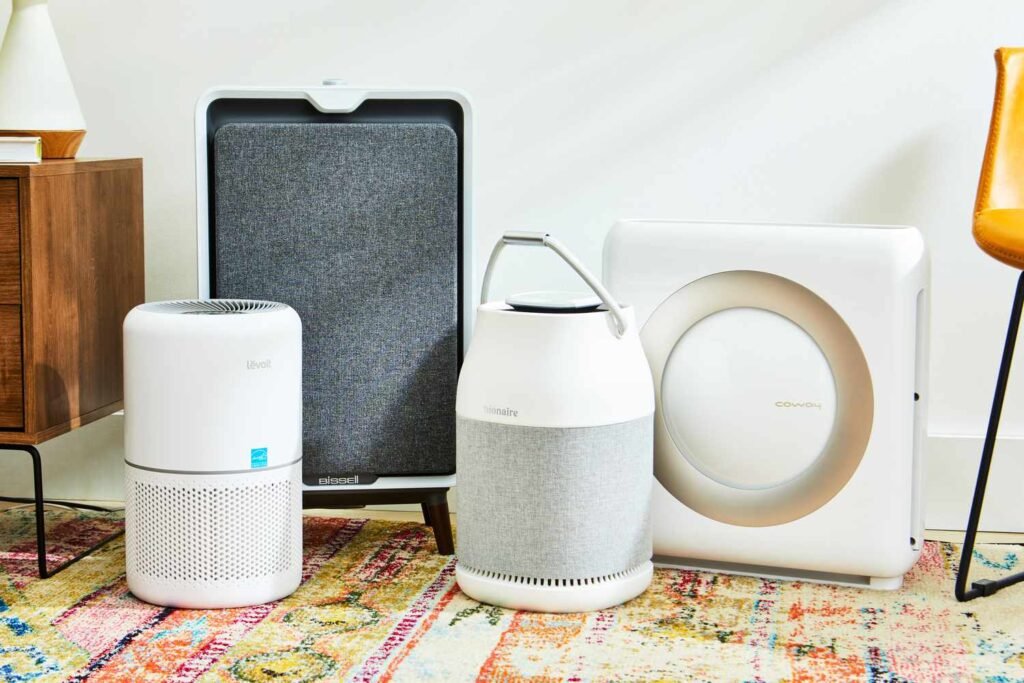
Finding the best air purifiers can get confusing fast. I can understand why. Once I started comparing models, I found myself looking at CADR numbers, room-size claims, HEPA filters, carbon filters, noise levels, smart controls, and replacement-filter costs. And honestly, a higher price doesn’t automatically mean a better choice for your room.
The biggest thing I look for is whether the purifier actually matches the space it’s supposed to clean. A small bedroom doesn’t need the same machine as a large open living room. I also think about what someone is trying to deal with, whether that’s dust, pollen, pet dander, smoke, odors, or general indoor air quality.
For this guide, I compared current product specifications, expert reviews, customer feedback, filtration systems, room-size claims, CADR information where available, and overall value. Current 2026 testing from TechGearLab, for example, puts the Blueair Blue Pure 311i Max at the top of its tested list, while other current guides continue to recommend the Coway Airmega AP-1512HH and Levoit models for different room sizes and budgets.
Best Smart Air Purifiers for Home Large
- 1. COWAY Air Purifier for Home
- 2. BLUEAIR Blue Pure 311i Max Smart Air Purifier for Medium Rooms
- 3. PuroAir 240 HEPA Air Purifiers for Home Pets
- 4. LEVOIT Smart Air Purifiers for Home Large Room
- 5. WINIX 5510 Air Purifier (New Generation of 5500
- 6. LEVOIT Core 300 Purifier with Replacement Filter
- 7. BLUEAIR Blue Pure 211i Max
Comparison Table
| Product | Best For | Capacity / Size | Key Feature | Rating | Price Category |
|---|---|---|---|---|---|
| Coway Airmega AP 1512HH Mighty | Overall use | Medium rooms | Particle + carbon filtration | Varies | Mid range |
| Blueair Blue Pure 311i Max | Smoke and medium rooms | Medium rooms | HEPASilent filtration | Varies | Mid range |
| PuroAir Air Purifier | Allergies and dust | Varies by model | Multi stage filtration | Varies | Mid range |
| Levoit Core 400S | Smart home use | Medium rooms | Smart controls | Varies | Mid range |
| Winix 5510 | Pets and odors | Medium rooms | Carbon + PlasmaWave | Varies | Mid range |
| Levoit Core 300 | Bedrooms and small rooms | Small rooms | Compact filtration | Varies | Budget |
| Blueair Blue Pure 211i Max | Large rooms | Large rooms | High airflow + smart features | Varies | Premium |
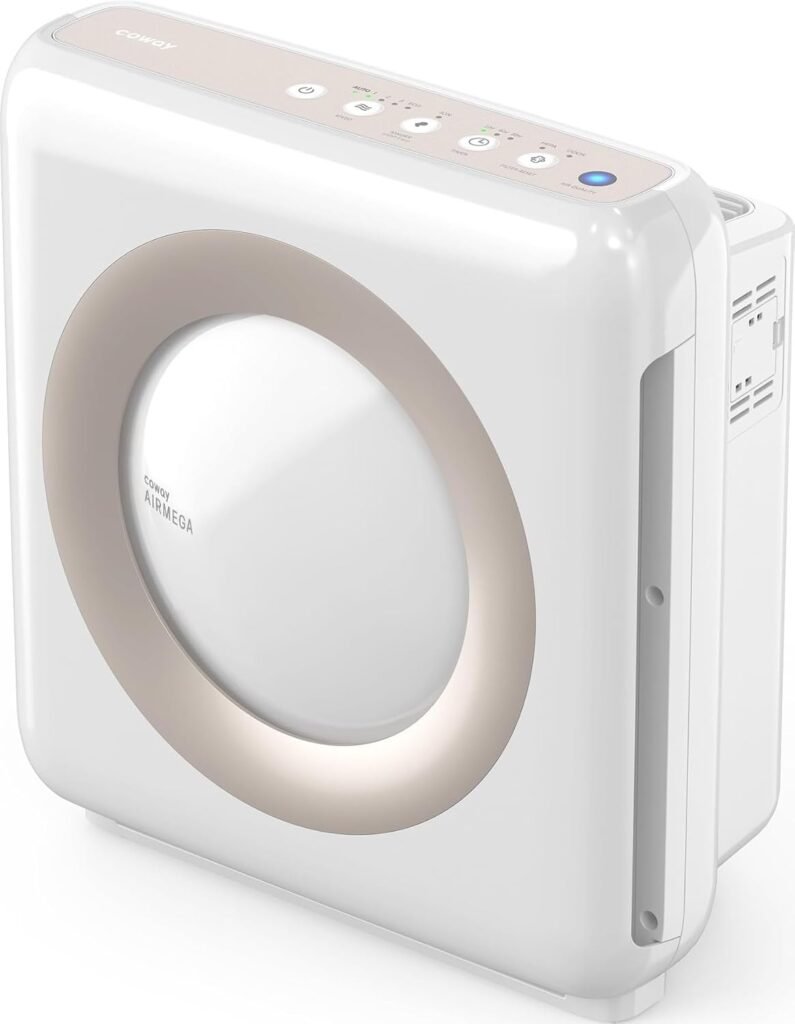
1. Coway Airmega AP-1512HH Mighty
The Coway Airmega AP-1512HH Mighty is the kind of product I’d recommend when someone tells me, “I don’t need anything fancy. I just want a good air purifier that works.”
Its compact footprint makes it easier to fit into a bedroom, home office, or medium-size living room. The filtration setup combines a washable pre-filter with particle filtration and activated carbon, giving it a useful combination for everyday airborne particles and some odors.
One thing I like about this model is that you don’t have to spend your entire budget on smart-home features to get a capable air cleaner. The controls are straightforward, and the design has been around long enough that there’s a lot of information available about it.
Current testing isn’t completely unanimous on every aspect. TechGearLab ranks the Mighty fourth among its 2026 tested models and gives it a strong air-cleaning score, while noting that noise is one of its weaker areas.
If you’re shopping for an air purifier for allergies, dust, or everyday indoor air quality, this remains one of the first models I’d compare.
Reasons To Buy:
- Strong cleaning performance for its size
- Practical controls and automatic operation
Includes particle filtration and activated carbon - Widely reviewed and easy to find
- Reasonable ongoing filter costs compared with some premium models
Reasons To Aviod:
- Not designed for very large open spaces
- Louder at higher fan speeds
- Lacks some of the newer smart features found on competitors
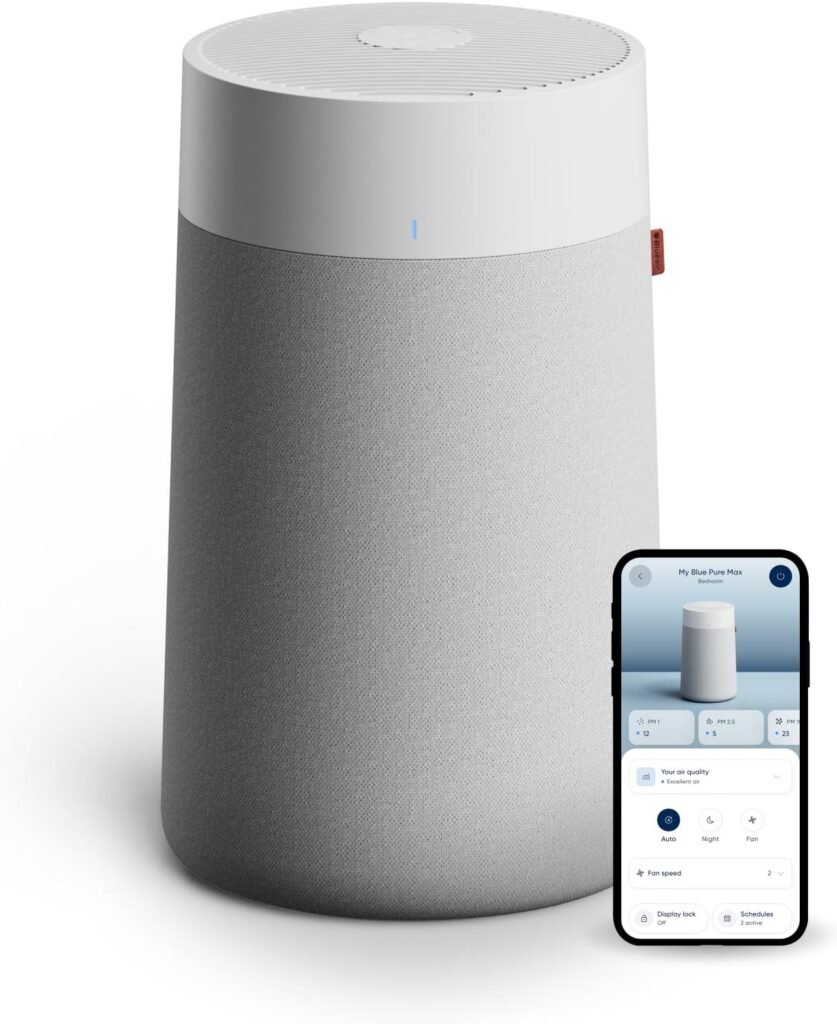
2. Blueair Blue Pure 311i Max
If smoke is one of your main concerns, I’d put the Blueair Blue Pure 311i Max high on the shortlist.
Good Housekeeping’s latest smoke testing named this model its top pick after more than 60 hours of lab and real-world testing. TechGearLab also placed it at the top of its broader 2026 air purifier rankings.
The design is another reason I like it. It doesn’t have the bulky look that some air purifiers have, so it’s easier to leave sitting in a bedroom or living area without making the machine feel like the main piece of furniture.
Blueair also uses its HEPASilent filtration technology rather than simply following the traditional HEPA label approach. That’s worth knowing before you buy because shoppers often assume every purifier uses exactly the same filtration system.
Amazon itself has featured the Blue Pure 211i Max in an Amazon Ads case study, highlighting the model’s cleaning capacity and quieter operation as key selling points.
If I were mainly concerned about smoke, dust, and airborne particles, I’d definitely compare this one against the Coway before buying.
Reasons To Buy:
- Strong particle-cleaning performance
- Quiet operation
- Modern compact design
- Useful for smoke and everyday pollutants
Reasons To Aviod:
- Filter replacement cost should be considered
- Not intended for very large open spaces
- Blueair’s filtration approach differs from traditional HEPA designs
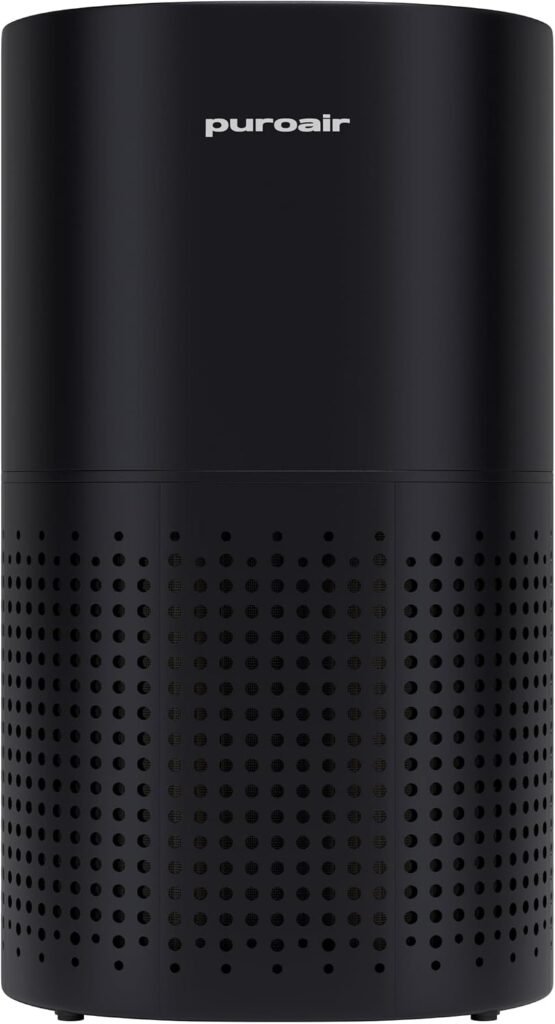
3. PuroAir Air Purifier
The PuroAir Air Purifier is one I’d look at if your main reason for buying an air purifier is dealing with everyday airborne particles.
If you’re anything like me, the first things you probably think about are dust, pollen, pet dander, and the general stuff floating around indoors. That’s where a purifier like this can make sense. PuroAir markets its purifiers around multi stage filtration and cleaner indoor air, with models designed for different room sizes.
I wouldn’t buy any air purifier based on the word “HEPA” alone, though. Room size, airflow, filter design, and how often you actually run the machine all matter.
The PuroAir range is also popular with shoppers who specifically search for an air purifier for allergies or an air purifier for bedroom use. That’s a useful category to look at because allergy focused buyers usually care more about particle filtration than fancy app features.
Before buying, I’d check the exact PuroAir model on Amazon because the brand sells different versions with different coverage and specifications.
If your main goal is straightforward particle filtration and you’re comparing several mid range options, PuroAir deserves a place on the shortlist.
Reasons To Buy:
- Designed around particle filtration
- Compact footprint
Simple operation - Useful for bedrooms and living spaces
- Good option for allergy focused buyers
Reasons To Aviod:
- Filter replacement cost should be checked
- Room coverage depends on the exact model
- Fewer premium features than some smart competitors
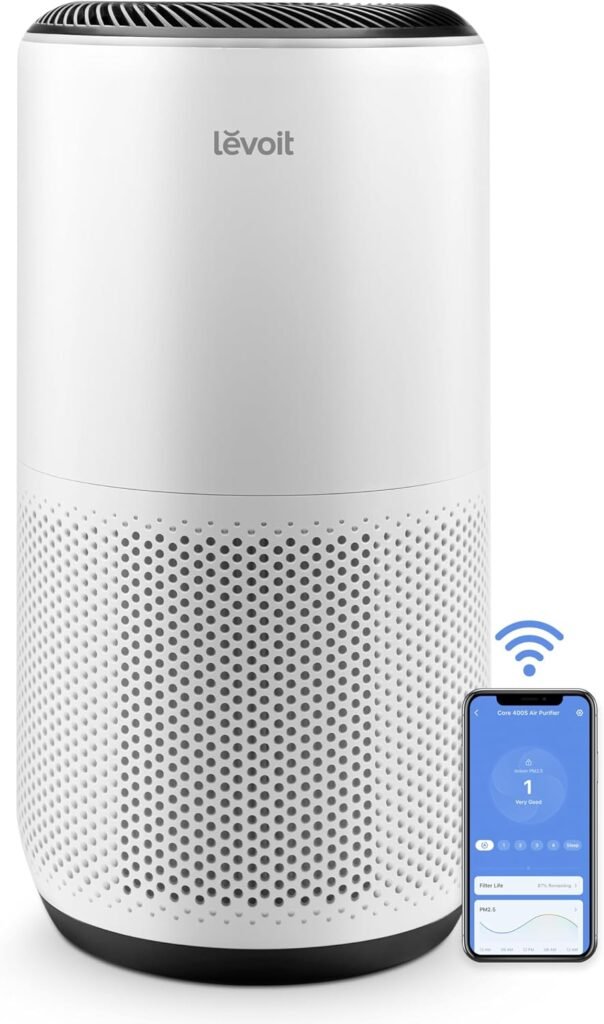
4.Levoit Core 400S
The Levoit Core 400S sits in a useful middle ground. It’s bigger and more capable than a small bedroom purifier, but it doesn’t feel like you’re buying a huge machine for your home.
The smart controls are probably the biggest reason I’d choose it over a simpler model. Being able to monitor and control the purifier through connected features is convenient, especially if you like setting things up and leaving them running automatically.
The Core 400S also uses a multi stage filtration system designed to capture airborne particles while helping with odors. For everyday household use, that combination makes more sense to me than buying a purifier that focuses on just one type of pollutant.
Here’s the thing, though. I wouldn’t pay extra for smart features if you’re never going to use them. A basic purifier can still be the better value if all you want is filtration.
For someone who wants an air purifier for home with a modern interface, automatic operation, and enough capacity for a medium size room, the Core 400S is worth comparing.
If your room is small and your budget is tighter, the Core 300 below is a much more sensible option.
Reasons To Buy:
- Smart controls
- Auto mode
- Modern design
- Good medium room option
- Convenient app functionality
Reasons To Aviod:
- Costs more than basic compact models
- Replacement filters are an ongoing expense
- Not the best choice for very large open spaces
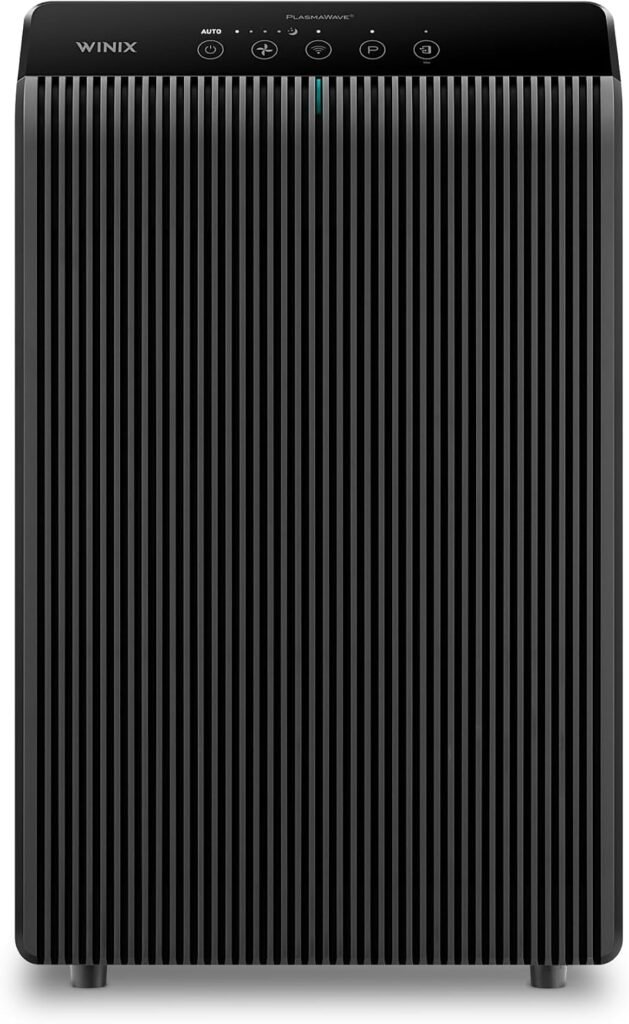
5. Winix 5510
The Winix 5510 is particularly interesting if you’re dealing with more than just dust.
Pet owners, for example, often have to think about dander, hair, odors, and everyday airborne particles at the same time. Cooking smells and smoke can create similar problems.
That’s where the Winix 5510’s combination of particle filtration, activated carbon, and PlasmaWave technology makes it worth considering.
I wouldn’t say that having more features automatically makes an air purifier better. What matters is whether those features actually match what you’re trying to solve.
For someone searching for the best air purifier for pets, this is one of the models I’d compare with Levoit and Coway. The activated carbon component is especially useful to consider if odors are one of your main concerns.
The automatic mode is also handy because you don’t necessarily have to keep changing the fan speed yourself.
I’d choose this over a tiny purifier if I had a medium size room with pets and wanted something capable of handling everyday household air pollution without moving into an expensive premium model.
Reasons To Buy:
- Multi stage filtration
- Activated carbon filter
- Automatic operation
- PlasmaWave technology
- Good option for homes with pets
Reasons To Aviod:
- Larger than compact bedroom models
- Replacement filters add ongoing cost
- Some buyers may prefer simpler filtration systems
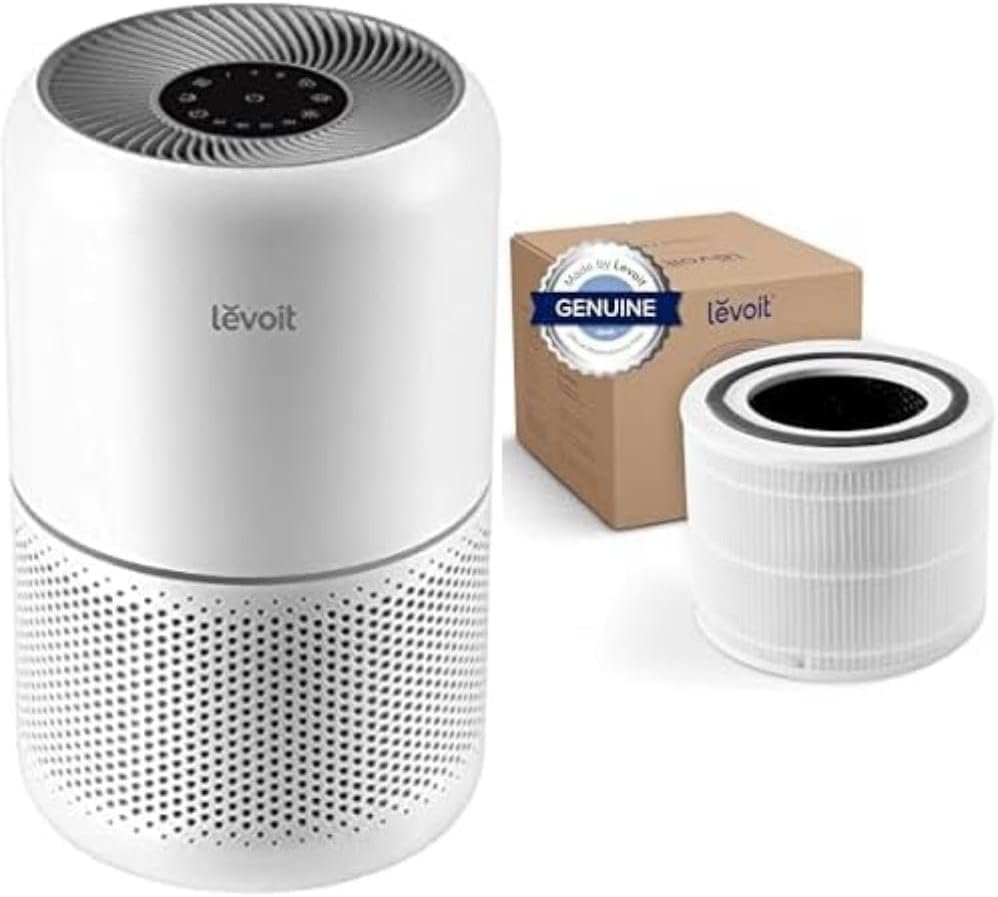
6.Levoit Core 300
If you need a small air purifier for a bedroom, the Levoit Core 300 is probably one of the first models I’d check.
Its biggest advantage is the size. You don’t need to rearrange half your room to find somewhere to put it, and the simple cylindrical design makes it easy to place beside a desk, bed, or other furniture.
I also think the price makes more sense for someone who isn’t sure how much they’ll use an air purifier. You can start with a smaller machine rather than immediately spending a few hundred dollars.
The important part is matching it to the room. I wouldn’t put a compact purifier like this in a large open living room and expect it to perform like a high capacity model.
For bedrooms, small apartments, offices, and other compact spaces, though, the Core 300 is much easier to justify.
If you’re specifically searching for the best budget air purifier, I’d compare its current Amazon price with similar compact models before buying. Prices can move around quite a bit.
For a large room, however, I’d skip the small units and look at something like the Blueair 211i Max.
Reasons To Buy:
- Compact size
- Affordable
- Easy to use
- Good bedroom option
- Multiple filter options available
Reasons To Aviod:
- Limited for large rooms
- Less airflow than larger models
- Replacement filter costs should be considered
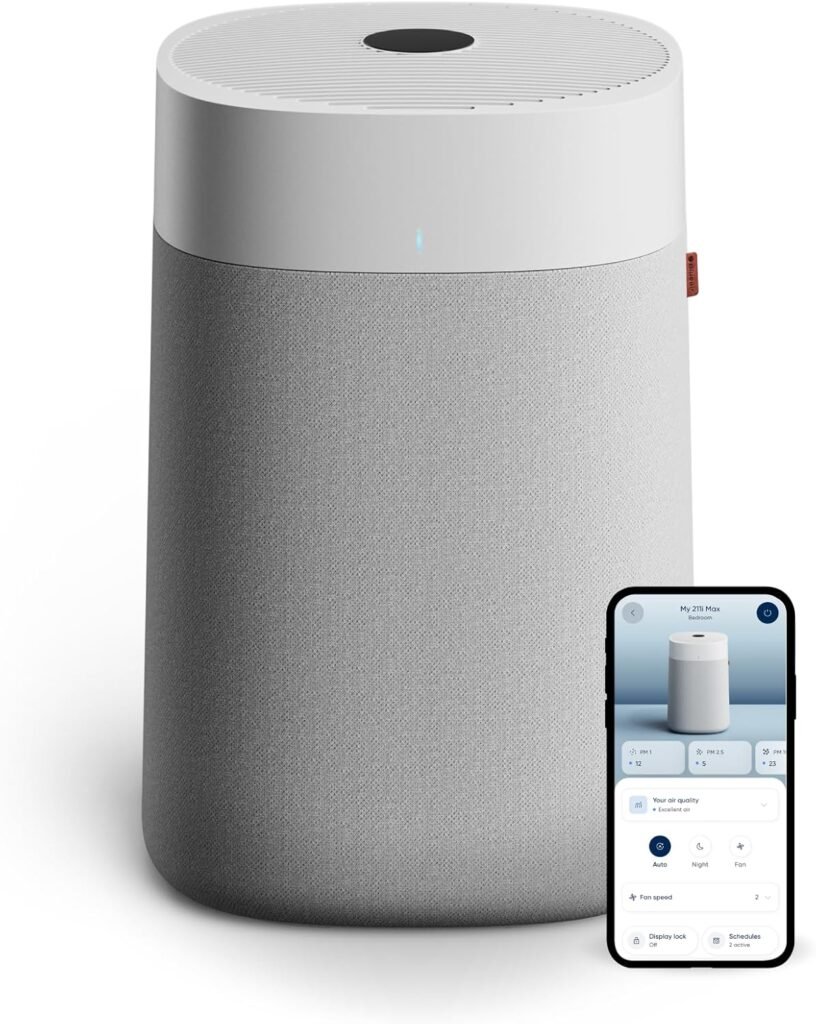
7. Blueair Blue Pure 211i Max
When you’re trying to clean a large room, I think the biggest mistake is focusing only on the purifier’s filter and ignoring airflow.
The Blueair Blue Pure 211i Max is designed for exactly this situation. It’s considerably larger than bedroom focused models because it needs to move more air through the filtration system.
That makes it a better option for a large living room, open floor plan, or another space where a small purifier would struggle to circulate enough air.
The 211i Max also keeps the modern Blueair design, so even though it’s a large appliance, it doesn’t have the same industrial appearance as some older large room purifiers.
I’d consider it particularly if you’re dealing with smoke, dust, pet related particles, or simply want more cleaning capacity.
But I wouldn’t buy it just because the numbers look bigger. If you’re cleaning a 150 square foot bedroom, there’s little reason to pay for a large room purifier.
For shoppers searching for the best air purifier for large rooms, though, this is one of the models I’d compare carefully with other high airflow options.
Reasons To Buy:
- High airflow
- Designed for larger spaces
- Strong particle cleaning
- Modern design
- Smart features
Reasons To Aviod:
- Takes more floor space
- Higher purchase price
- Replacement filters can be expensive
How to Choose the Best Air Purifier
Match It to Your Room
I always start with room size.
A compact bedroom purifier isn’t designed to do the same job as a large room model. Check the manufacturer’s recommended coverage and look at CADR when it’s available.
For large rooms, higher airflow is usually much more important than having a long list of extra features.
Check the Filtration System
Think about what you actually want to remove.
If dust, pollen, and pet dander are your main concerns, focus on particle filtration.
If you’re dealing with cooking smells, smoke, or pet odors, I’d also look for activated carbon filtration.
Look at CADR
CADR stands for Clean Air Delivery Rate. It tells you how quickly a purifier can deliver filtered air.
I find it particularly useful when comparing two different models because advertised room coverage can be measured differently between manufacturers.
Consider Noise
If you’re buying an air purifier for a bedroom, don’t ignore noise.
A purifier that is technically powerful but too loud to sleep around may end up being switched off every night.
I’d look for a low noise or sleep mode and check independent reviews where possible.
Calculate Filter Costs
The initial price isn’t the entire cost.
Before buying, check how much replacement filters cost and how frequently the manufacturer recommends changing them. A cheap purifier with expensive filters may cost more over several years than a slightly more expensive model with affordable replacements.
Decide If Smart Features Matter
Wi Fi, apps, air quality sensors, and automatic modes can be useful, but they’re not essential.
If you just want to turn the purifier on and let it run, you may get better value from a simpler model.
Choose Based on Your Main Problem
For allergies, prioritize strong particle filtration.
For pets, look for particle and odor filtration.
For smoke, pay attention to airflow and both particle and carbon filtration.
For a bedroom, focus on size and noise.
For large rooms, prioritize CADR and airflow.
FAQs
What is the best air purifier in 2026?
I don’t think there’s one model that’s best for every home. The Coway Airmega AP 1512HH is a strong all around choice, while the Blueair 311i Max is worth considering for smoke and medium size rooms.
What is the best air purifier for allergies?
I’d focus on a properly sized purifier with strong particle filtration. Coway, Blueair, Levoit, and PuroAir all have models worth comparing depending on your room and budget.
What is the best air purifier for a bedroom?
For a smaller bedroom, I’d look at the Levoit Core 300. It’s compact, relatively affordable, and doesn’t require the space of a large room purifier.
Do air purifiers remove dust?
They can capture airborne dust particles, but they won’t remove dust that has already settled on furniture, floors, or other surfaces. Regular cleaning is still necessary.
What is the best air purifier for pets?
I’d compare models that combine particle filtration with odor control. The Winix 5510 and Levoit models are worth considering if pets are one of your main reasons for buying.
Do air purifiers help with smoke?
Yes, a properly sized air purifier can help reduce airborne smoke particles. For smoke, I’d pay particular attention to airflow, particle filtration, and activated carbon.
Is PuroAir a good air purifier?
PuroAir is worth considering if you’re mainly looking for a purifier for everyday airborne particles such as dust, pollen, and pet dander. I’d compare the exact PuroAir model, room coverage, filter cost, and current Amazon price before buying.
How often should I replace an air purifier filter?
There’s no single schedule that works for every purifier. Filter life depends on the model, usage, and air quality. I recommend following the manufacturer’s replacement guidance for your specific model.