
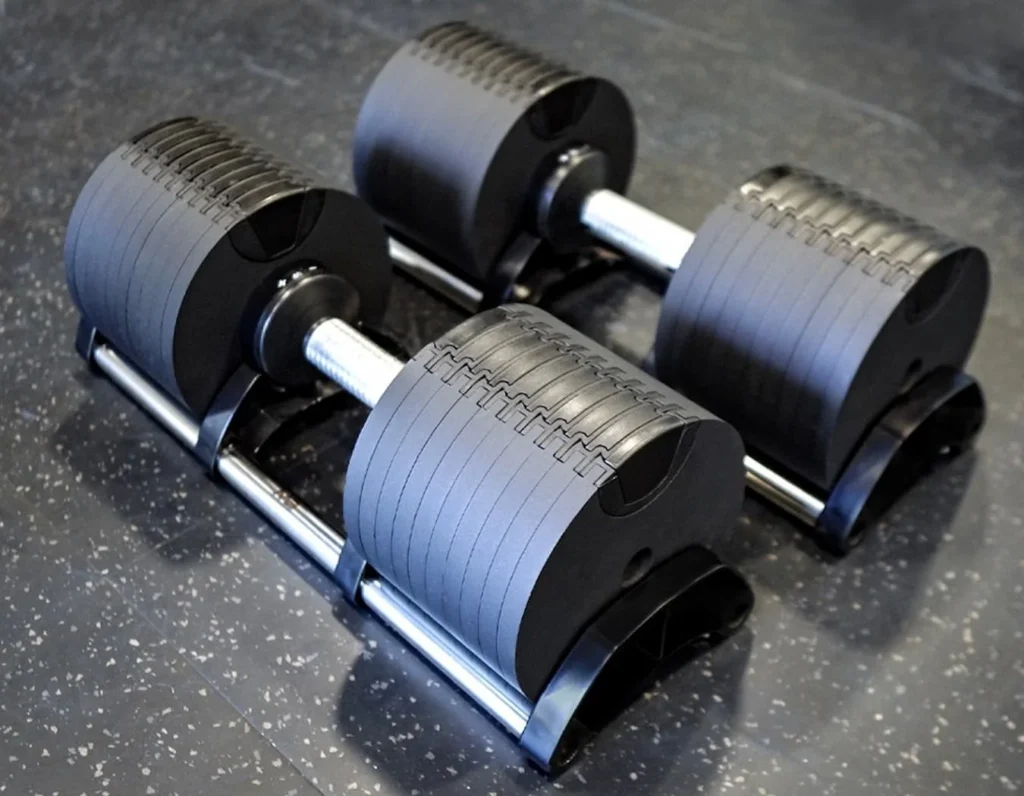
Why adjustable dumbbells beat a full rack for most home gyms
A single pair of adjustable dumbbells replaces anywhere from 10 to 30 pairs of fixed weights. That’s the whole pitch and for anyone training in a spare room, garage corner or apartment, it’s a strong one. A fixed set covering 5 to 52.5 lb costs more, weighs more, and eats an entire wall.
But adjustable dumbbells are not a solved product category. They involve real trade-offs: moving parts that can fail, handles that sit wider than a standard dumbbell, and mechanisms that slow you down between sets. The right pick depends almost entirely on how you train, not on which one has the biggest number on the box.
Three questions decide it:
- How heavy will you actually go? Most people plateau far below the max. But if you’re deadlifting or rowing with dumbbells, a 50 lb ceiling gets tight fast.
- How fast do you need to change weight? Drop sets and supersets punish slow mechanisms. Straight sets with 90-second rests don’t care.
- How rough will you be with them? Almost every adjustable dumbbell warns against dropping. If your training style involves setting weights down hard, that narrows the field to two or three options.
How we put this list together
This is a research-based comparison, not a hands-on test. We have not personally used all seven of these dumbbells, and we think you should know that before reading our conclusions. What this list is based on: manufacturer specifications, published weight ranges and dimensions, adjustment mechanism design, warranty and replacement-part availability, and recurring themes across verified owner reviews. Where we describe how something feels or fails, we’re summarising what owners consistently report — not something we measured ourselves. What that means for you: use this to shortlist two or three options, then read recent owner reviews on the specific variant you’re considering. Specs on this page were accurate at the time of writing but manufacturers revise models frequently.
7 adjustable dumbbells compared at a glance
- 1. BowFlex Results Series SelectTech Dumbbells
- 2. Nuobell 580 Adjustable Dumbbells, 5-80 lb,
- 3.PowerBlock Elite EXP — smallest footprint
- 4. Ironmaster Quick-Lock — most durable, heaviest ceiling
- 5. REP Fitness QuickDraw — closest to a fixed dumbbell
- 6. Core Fitness Adjustable Dumbbell — best value
- 7. FLYBIRD Adjustable Dumbbell
Comparison Table
| # | Model | Weight range (per hand) | Mechanism | Best for |
|---|---|---|---|---|
| 1 | BowFlex SelectTech 552 | 5–52.5 lb | Dual dial | Best all-rounder |
| 2 | NÜOBELL 80 lb | 5–80 lb | Twist handle | Fastest changes |
| 3 | PowerBlock Elite EXP | 5–50 lb (expandable) | Pin + adder weights | Smallest footprint |
| 4 | Ironmaster Quick-Lock | 5–75 lb (expandable) | Screw lock | Heavy & durable |
| 5 | REP Fitness QuickDraw | 10–60 lb | Lever | Feel closest to fixed |
| 6 | Core Fitness Adjustable | 5–50 lb | Dial + cradle | Best value |
| 7 | FLYBIRD Adjustable Dumbbell | 5–55 lb (varies by model) | Dial | Budget / beginner |
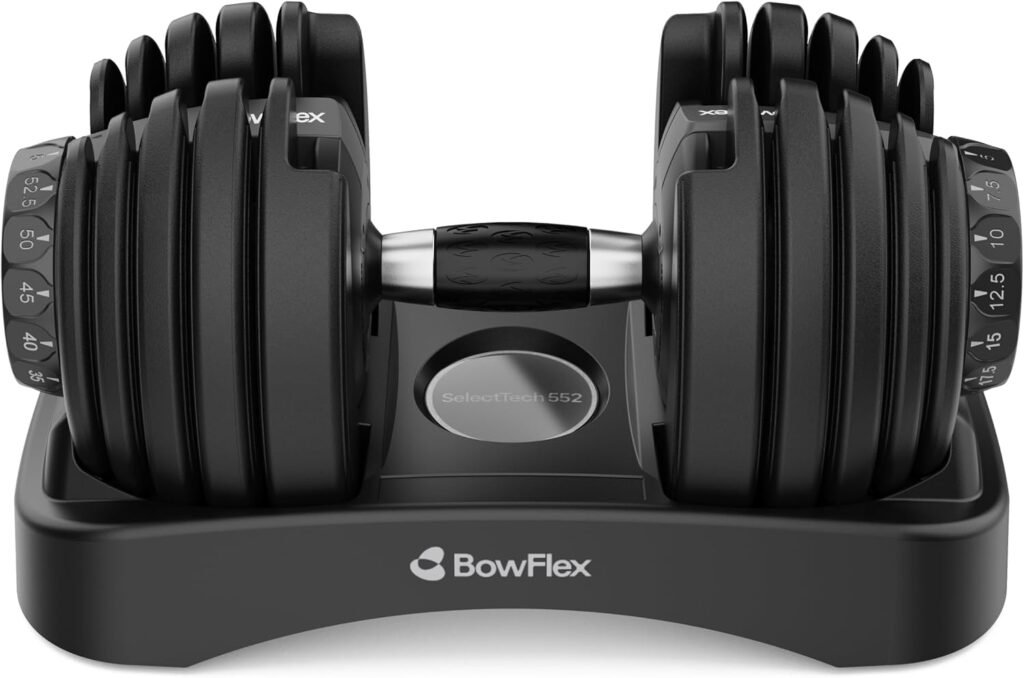
1. BowFlex SelectTech 552 — best all-rounder
Range: 5–52.5 lb per hand · Increments: 2.5 lb up to 25 lb, then 5 lb · Settings: 15
The SelectTech 552 is the default recommendation for a reason. Two dials — one per end — let you set each side independently, and the 2.5 lb jumps in the lower range matter more than people expect. Going from 12.5 to 15 lb on a lateral raise is a 20% increase; without small increments, beginners stall or ego-lift.
The trade-off is length. A 552 at full weight is noticeably longer than a fixed 50 lb dumbbell, which makes some movements awkward — bench press with a tight bar path, and anything where the dumbbell has to clear your torso. The plastic outer shell also takes cosmetic damage quickly.
Reasons To Buy:
- 2.5 lb increments in the range where they matter most
- Dial adjustment is fast and intuitive
- Widely available, strong parts and warranty support
- Well-proven design with a long track record
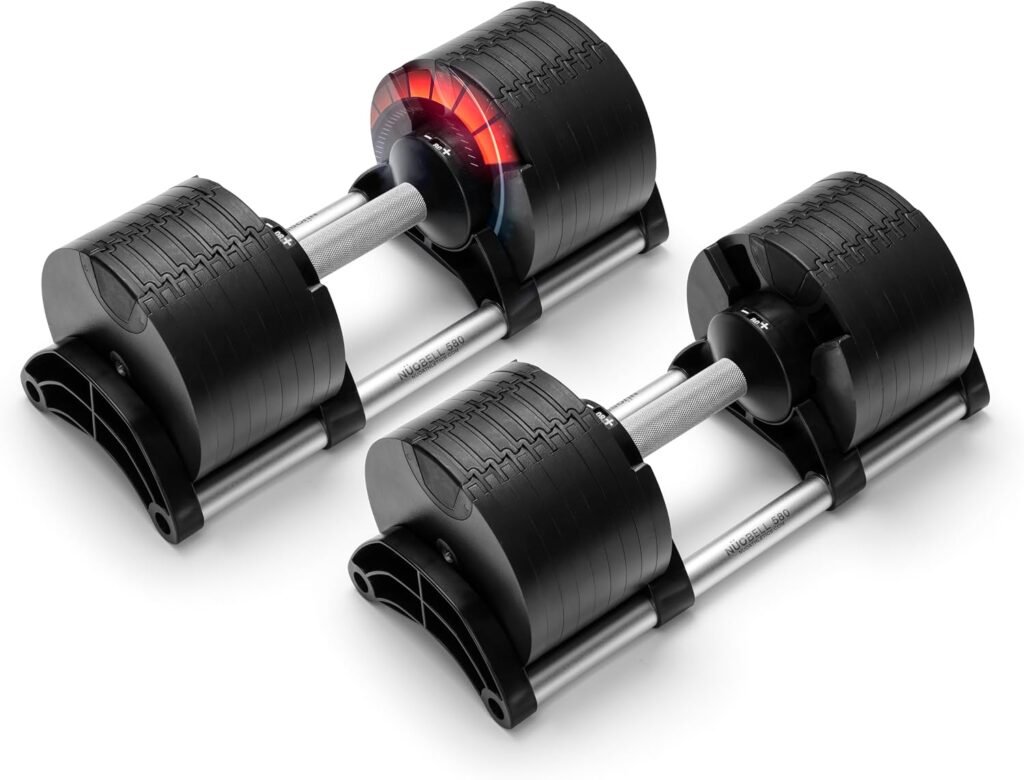
2. NÜOBELL 80 lb — fastest weight changes
Range: 5–80 lb per hand · Increments: 5 lb · Settings: 16
The NÜOBELL’s twist mechanism is genuinely different. You rotate the handle in the cradle and unused plates stay behind — no dial to scroll through, no pin to find. In practice this is the fastest adjustment of anything here, which makes it the best option for drop sets and circuits.
It’s also the most dumbbell-shaped dumbbell on the list. The handle is knurled metal, the plates are steel, and the overall length stays reasonably compact even at 80 lb. That 80 lb ceiling covers most people’s dumbbell training permanently.
Cons are real, though: 5 lb increments only, so no 2.5 lb micro-progression on small lifts. And the twist mechanism means you must set it down flat in the cradle — awkward if you train on carpet or uneven flooring.
Reasons To Buy:
- Genuinely the fastest adjustment mechanism
- 80 lb ceiling most lifters will never outgrow
- Steel construction, knurled handle, premium feel
- Compact for the weight
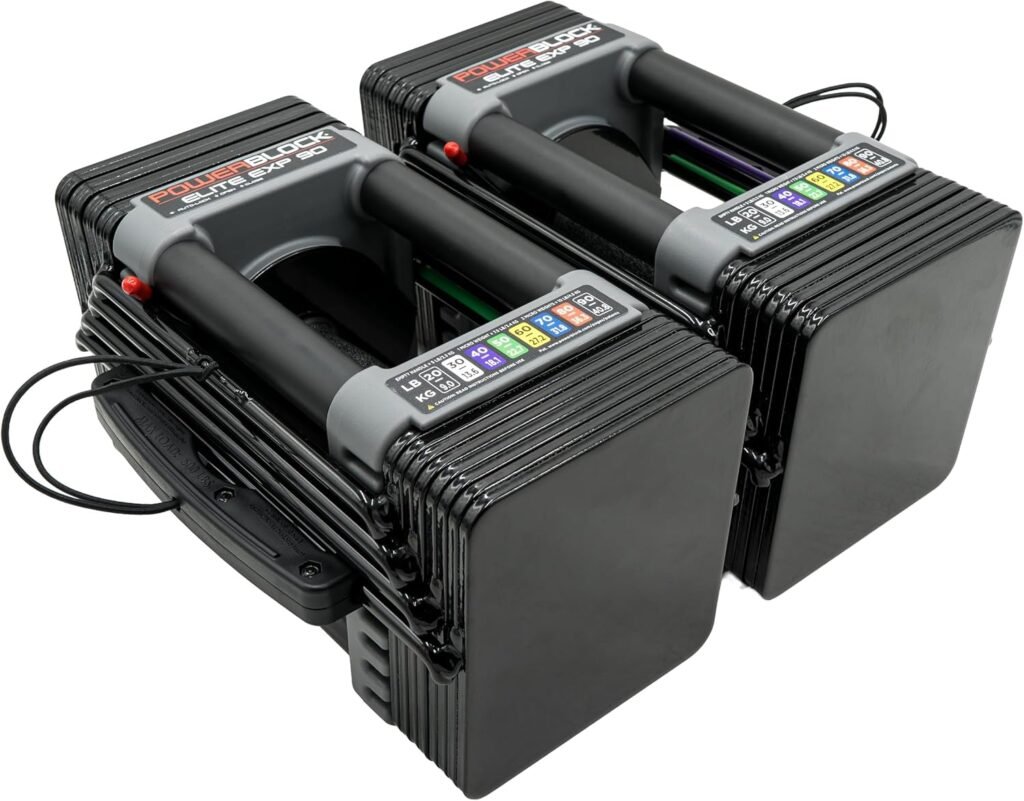
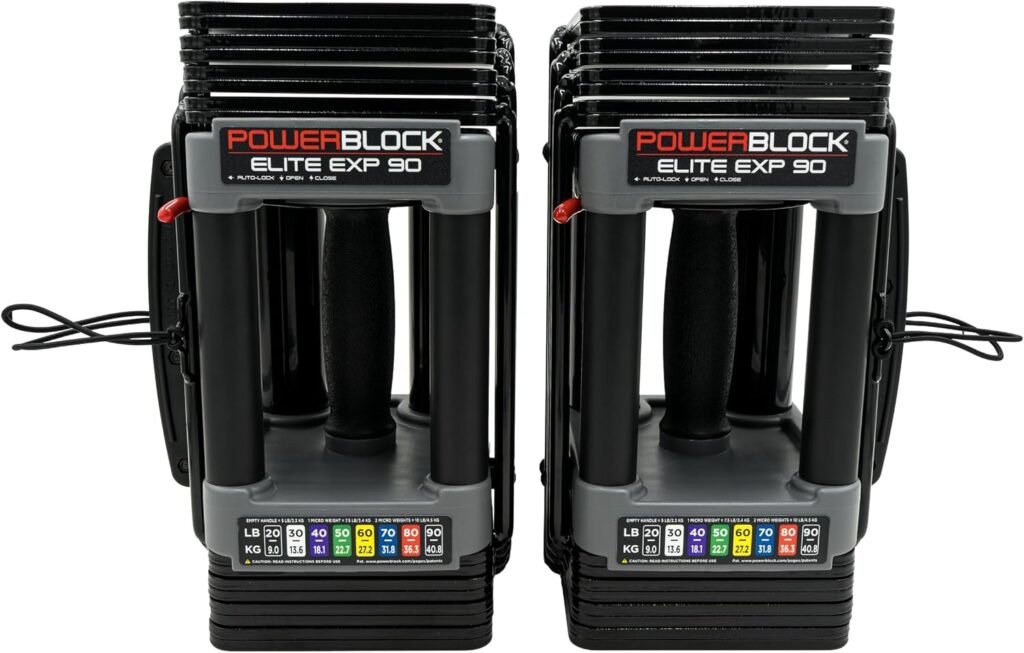
3. PowerBlock Elite EXP — smallest footprint
Range: 5–50 lb, expandable to 70 lb and 90 lb with kits · Increments: 2.5–5 lb
PowerBlocks look strange and that puts people off, but the cube design is the most space-efficient on the market — no cradle required, and they stack. For a genuinely small apartment, this is often the only thing that fits.
The expansion path is the other selling point. Buy the 50 lb base, add kits later as you get stronger, and you’re not re-buying the whole system. Adjustment uses a selector pin plus magnetic adder weights for small jumps.
The handle sits inside a rectangular cage, which some lifters never get used to — your hand is enclosed, and the wrist position is fixed. Try before committing if you can.
Reasons To Buy:
- Smallest footprint of any option here; no cradle needed
- Expandable to 90 lb without replacing the base
- Extremely durable, minimal plastic
- Handles being set down better than dial systems
4. Ironmaster Quick-Lock — most durable, heaviest ceiling
Range: 5–75 lb per hand, expandable to 120 lb+ · Increments: 2.5–5 lb
Everything else here is a mechanism. The Ironmaster is essentially a compact loadable dumbbell with a fast screw lock — solid steel, no plastic, no dial, nothing to break. Of everything on this list, these are the ones most likely to still be working in fifteen years.
The cost is time. Changing weight means unscrewing the lock, adding or removing plates, and screwing it back. It’s maybe 20–30 seconds per dumbbell once you’re practised. That’s fine for straight sets and genuinely annoying for anything else.
Reasons To Buy:
- All-steel construction; effectively unbreakable
- Expandable well past 100 lb per hand
- Can be set down normally without babying them
- Shortest handle length at heavy weights
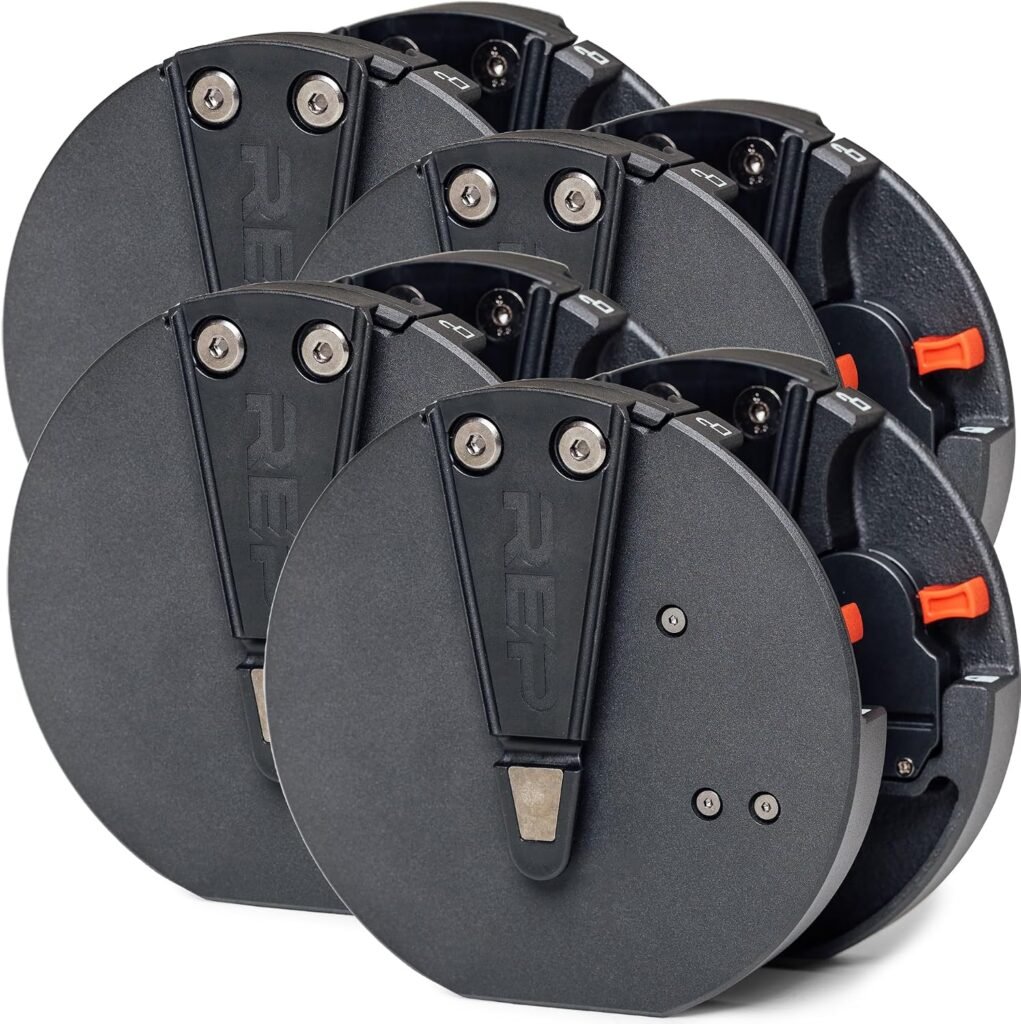
5. REP Fitness QuickDraw — closest to a fixed dumbbell
Range: approximately 10–60 lb per hand · Increments: 5 lb
The QuickDraw’s pitch is balance and feel. The lever adjustment is quick, and the weight distribution sits closer to a real fixed dumbbell than most dial systems — less of that top-heavy, wobbling sensation on presses.
The downside is the 10 lb starting weight, which rules it out for shoulder rehab, light lateral raises, or anyone just starting out. Pair it with a light fixed set if that’s you.
Reasons To Buy:
- Balanced feel, close to a fixed dumbbell
- Fast lever mechanism
- Solid build quality, good warranty support
- Good handle diameter and knurl
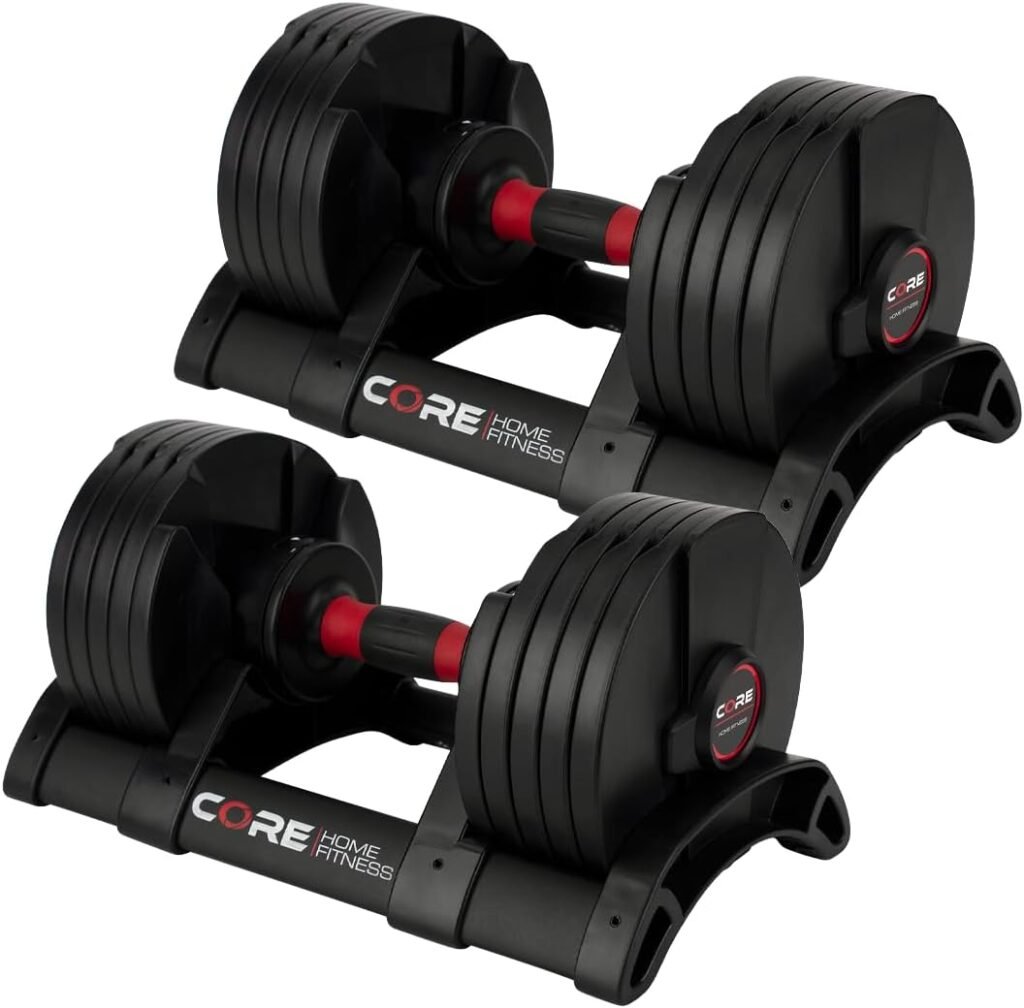
6. Core Fitness Adjustable Dumbbell — best value
Range: 5–50 lb per hand · Increments: 5 lb
Core Fitness sits in the gap between budget and premium. You get a metal-and-plastic dial system covering the range most home lifters need, at meaningfully less than the flagship options, with a shorter overall length than the SelectTech 552 at equivalent weight.
Build quality is a step below the premium picks, and the plastic cradle is the component most often mentioned in critical owner reviews. Treat them gently.
Reasons To Buy:
- Strong price-to-range ratio
- Shorter than comparable dial dumbbells
- Simple dial, easy to learn
- Covers the full useful range for most beginners
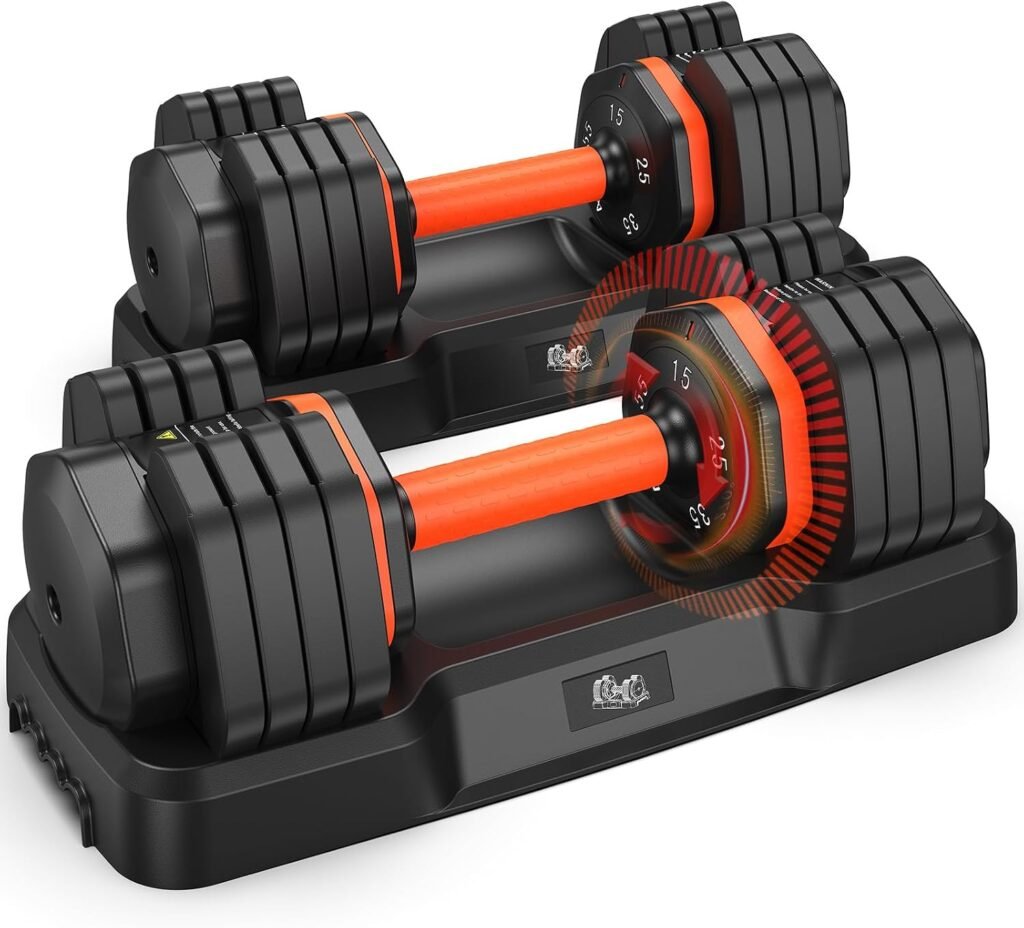
7. FLYBIRD Adjustable Dumbbell — budget / beginner pick
Range: varies by model (commonly 5–25 lb or 5–55 lb) · Increments: 5.5 lb typical
FLYBIRD is the entry point. These are the dumbbells you buy when you’re not yet certain you’ll stick with home training, or when you need a light pair for accessory work alongside a heavier system.
Expect budget-tier construction: more plastic, a looser dial feel, and a shorter realistic lifespan. That’s the deal you’re making, and at this price it’s a defensible one. Check the specific variant carefully — FLYBIRD sells several ranges under similar listings and the increments differ between them.
Reasons To Buy:
- Lowest cost of entry by a wide margin
- Genuinely useful for light and accessory work
- Compact and easy to store
- Low risk if you’re unsure about home training
How to choose: what actually matters
Increment size beats maximum weight. A 2.5 lb jump is a 25% increase on a 10 lb dumbbell and a 5% increase on a 50 lb one. If most of your accessory work is light, small increments matter far more than an 80 lb ceiling you’ll never touch.
Length is the hidden spec. Adjustable dumbbells are longer than fixed ones at the same weight, because unused plates travel with you. This affects bench press, chest flyes and any movement where the dumbbell passes close to your body. Check the listed length at maximum weight, not just the weight range.
No adjustable dumbbell survives being dropped. Every model here — including the Ironmaster, to a lesser degree — is designed to be set down under control. If you train to failure on presses without a spotter, factor that into your choice, or budget for a mat.
Buy the cradle situation, not just the dumbbells. Dial and twist systems require their stand to change weight. If your stand has to live under a bed, that’s a daily friction cost.
Check the warranty length and whether parts are sold separately. These are mechanical products. The brands that sell replacement dials, pins and springs are the ones worth trusting long-term.
FAQs
Are adjustable dumbbells worth it? For home training, generally yes. One pair replaces 10–15 pairs of fixed weights at a lower total cost and a fraction of the space. The trade-off is slower weight changes and lower drop tolerance.
What weight range should a beginner buy? A 5–50 lb range covers the great majority of beginner and intermediate training. Go higher only if you already know you’ll be doing heavy dumbbell rows, lunges or deadlifts.
Dial, pin, twist or screw — which mechanism is best? Twist is fastest, dial is the most intuitive, pin is the most compact, screw is the most durable. There’s no universal winner; match it to whether you train in circuits or straight sets.
Can you drop adjustable dumbbells? No. Treat all of them as set-down-only. Dropping voids most warranties and is the single most common cause of failure.
How long do adjustable dumbbells last? With controlled handling, quality dial and twist systems commonly last five to ten years. All-steel screw-lock systems can last decades. Budget models often show wear inside a year or two of regular use.
Do I need two dumbbells or is one enough? Two. Almost every effective dumbbell programme uses a pair. Single-dumbbell training is possible but limits you significantly.
Are they good for building muscle? Yes. Muscle responds to load, effort and progression, not to whether the plates are welded on. The only real limitation is the maximum weight, and only once you outgrow it.