
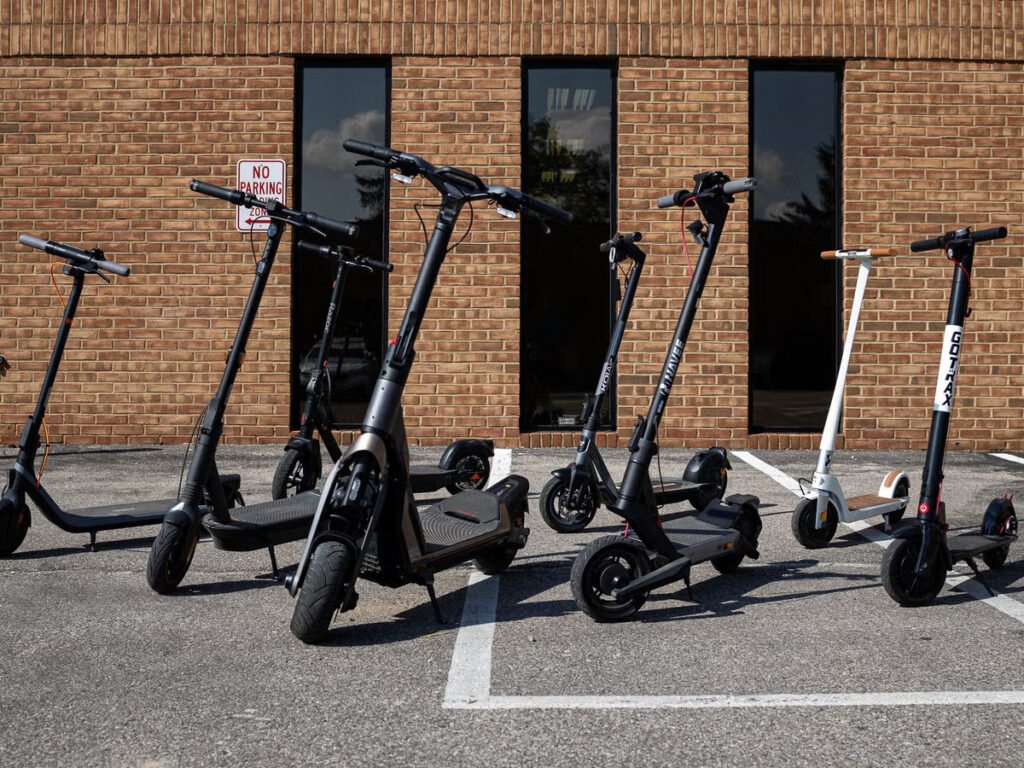
Buying an electric scooter used to be simple, mostly because there weren’t many good ones. That’s changed. Now you can spend $300 or $1,200 and both scooters will look roughly the same in a photo, which makes choosing genuinely confusing.
So I did the digging. Based on my research across manufacturer specs, verified customer feedback, and the general consensus from trusted review sites, I narrowed things down to five e-scooters that I think make sense for most adults in the US right now.
The best electric scooter for you depends on one honest question: how far do you actually ride? Someone going one mile to campus needs a completely different scooter than someone riding eight miles each way to work.
Below you’ll find picks for budget buyers, commuters, beginners, and riders who want serious range plus a buying guide so you know what the specs really mean.
best electric scooter
- 🛴 1. Gotrax G4 — Best Electric Scooter Under $500
- 🛴 2. Hiboy S2 Pro — Best Value Commuter Electric Scooter
- 🛴 3. NIU KQi3 Pro — Best Electric Scooter for Beginners and College Students
- 🛴 4. Hiboy Titan Pro — Best Electric Scooter for Rough Roads and Comfort
- 🛴 5. Segway Ninebot Max G2 — Best Long-Range Electric Scooter
Comparison Table
| Product | Price Range | Max Speed | Est. Range* | Weight Capacity | Best For |
|---|---|---|---|---|---|
| Gotrax G4 | $ | ~20 mph | Up to ~25 mi | ~220 lbs | Budget buyers |
| Hiboy S2 Pro | $–$$ | ~19 mph | Up to ~25 mi | ~260 lbs | Value commuting |
| NIU KQi3 Pro | $$ | ~20 mph | Up to ~31 mi | ~220 lbs | Beginners, students |
| Hiboy Titan Pro | $$ | ~22 mph | Up to ~40 mi | ~260 lbs | Rough roads, comfort |
| Segway Ninebot Max G2 | $$$ | ~22 mph | Up to ~43 mi | ~265 lbs | Long range |
🛴 1. Gotrax G4 — Best Electric Scooter Under $500
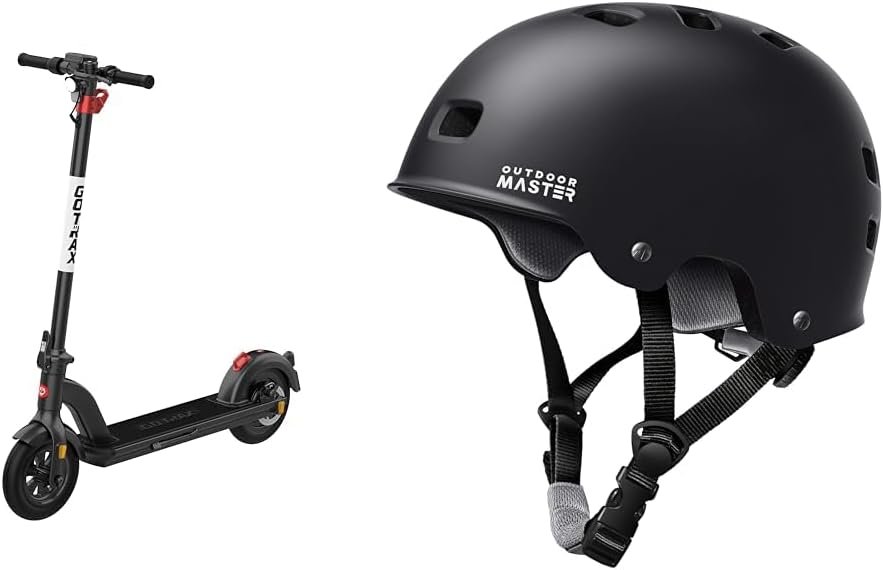
If you’re buying your first e-scooter and don’t want to spend much, the Gotrax G4 is the one I’d point most people toward. Gotrax has been one of the most widely bought budget scooter brands in the US for years, and the G4 sits at the top of their entry lineup.
What you’re getting is a legitimately usable commuter scooter — 10-inch pneumatic tires that soak up sidewalk cracks, a folding stem, and a top speed in line with scooters costing more. What you’re not getting is suspension or premium build quality.
In my opinion, this is the best affordable electric scooter for short trips: running errands, riding to a train station, or getting around a neighborhood.
Key Features
- Motor: 350W (manufacturer-rated)
- Top speed: around 20 mph
- Claimed range: up to about 25 miles
- Weight capacity: about 220 lbs
- Tires: 10-inch pneumatic
- Brakes: disc brake plus electronic braking
- Folding stem for storage and transport
- LED display with speed and battery level
- Front LED headlight and rear brake light
🛴 2. Hiboy S2 Pro — Best Value Commuter Electric Scooter
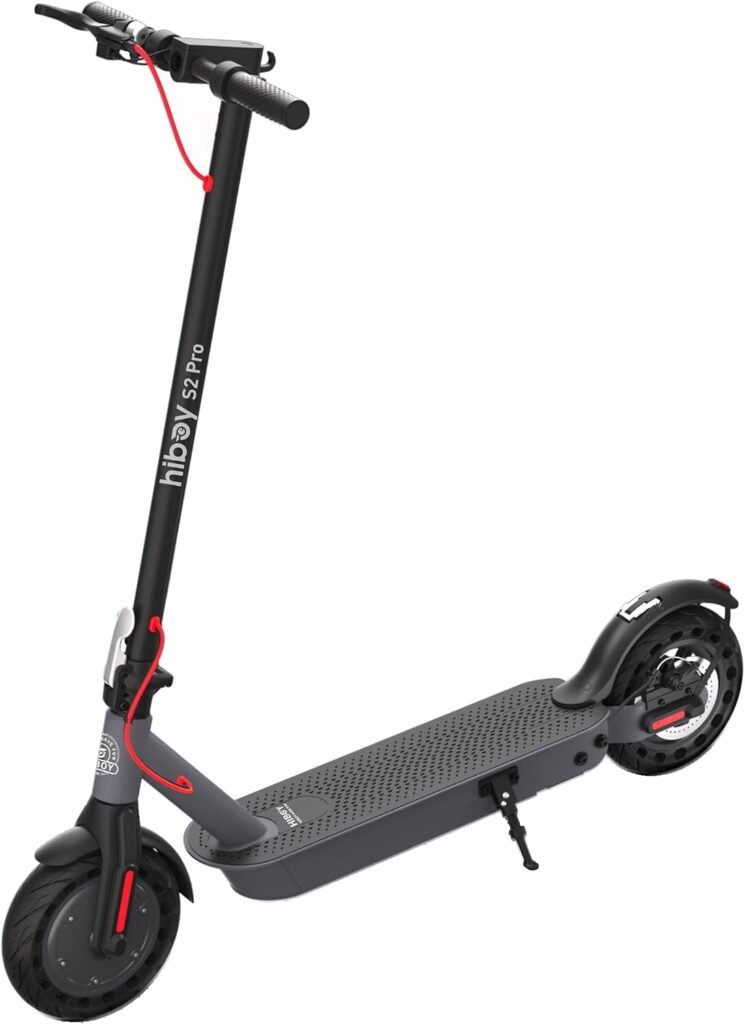
The Hiboy S2 series is one of the most popular commuter e-scooter lines in the US, and the S2 Pro is the version I’d choose. It takes the standard S2 and adds a bigger motor and 10-inch pneumatic tires, which is exactly where the extra money should go.
Based on my research, this is the sweet spot for people who ride 4 to 8 miles a day on decent pavement. The 260 lb weight capacity also makes it one of the more practical picks for larger riders on a modest budget.
I’d consider this a strong choice if you want commuter-grade range without crossing into $700+ territory.
Key Features
- Motor: 500W (manufacturer-rated)
- Top speed: around 19 mph
- Claimed range: up to about 25 miles
- Weight capacity: about 260 lbs
- Tires: 10-inch pneumatic
- Brakes: dual braking (electronic + rear disc)
- Folding design with carry handle
- IPX4 water-resistance rating (light rain, not immersion)
- Companion app with riding data and settings
- Front headlight, rear brake light, side reflectors
🛴 3. NIU KQi3 Pro — Best Electric Scooter for Beginners and College Students
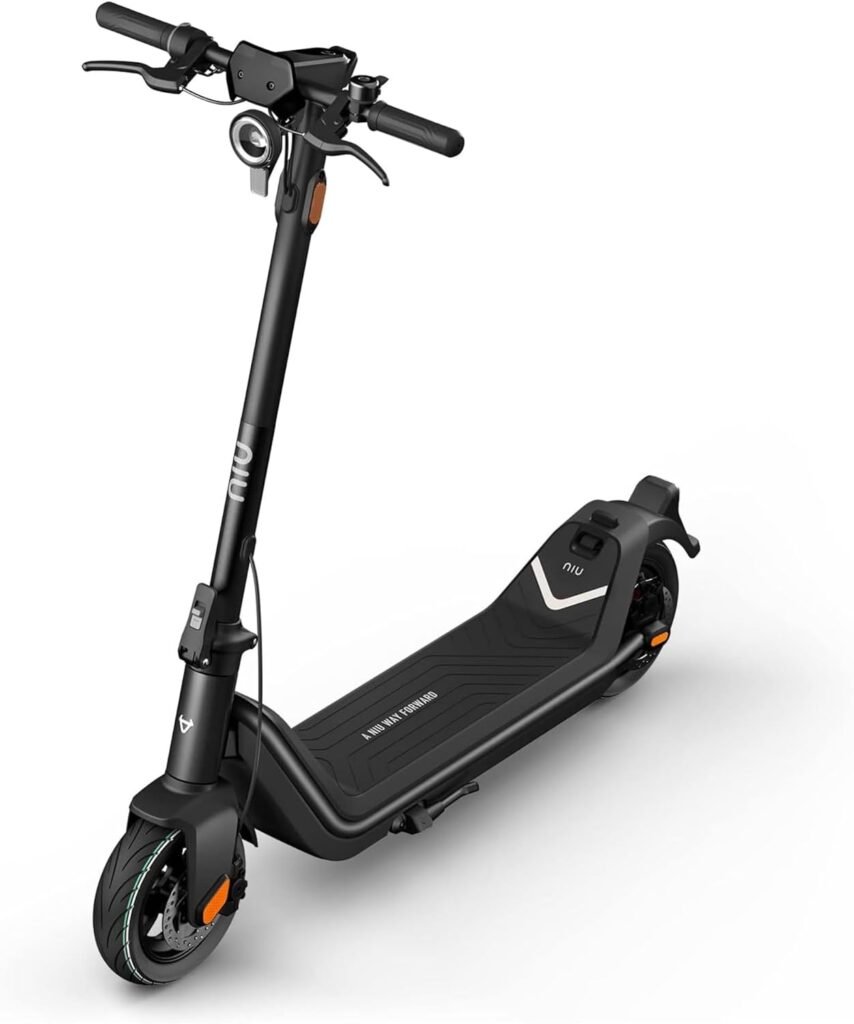
If someone asked me which electric scooter to buy without thinking too hard about it, I’d say the NIU KQi3 Pro. It’s consistently one of the best-reviewed mid-range e-scooters among US buyers and trusted review outlets, and the reason is balance — nothing about it is extreme, and everything about it is solid.
The triple braking setup is the standout. Front drum brake, rear disc, and regenerative electronic braking give you stopping power that inspires confidence, which matters enormously for new riders.
For college students, the combination of a manageable folded size, real range, and tubeless tires that resist flats is hard to beat.
Key Features
- Motor: 350W nominal, higher peak output
- Top speed: around 20 mph
- Claimed range: up to about 31 miles
- Weight capacity: about 220 lbs
- Tires: 9.5-inch tubeless pneumatic
- Brakes: triple system (front drum, rear disc, regenerative)
- IP54 rating for dust and light water resistance
- NIU app with speed modes, lock function, and firmware updates
- Folding stem with secure latch
🛴 4. Hiboy Titan Pro — Best Electric Scooter for Rough Roads and Comfort
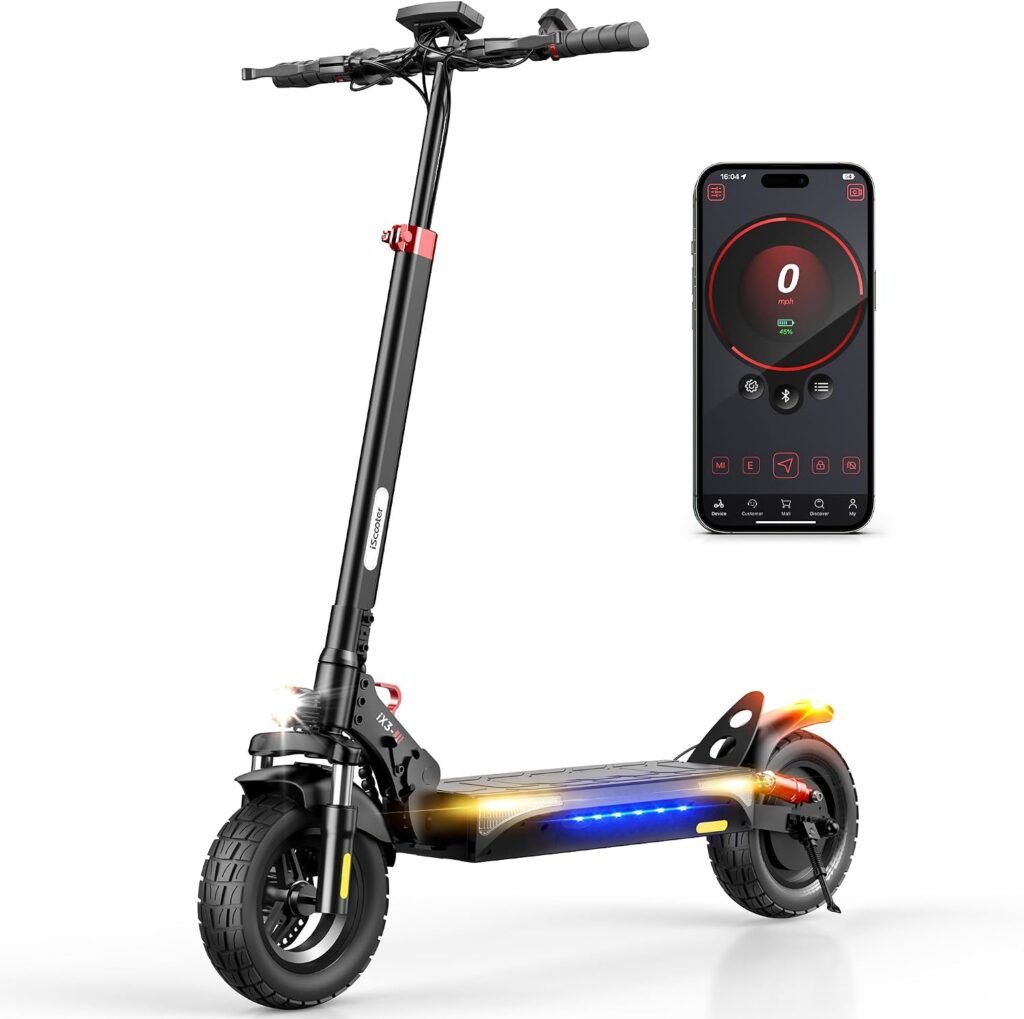
Most complaints about electric scooters come down to one thing: the ride is harsh. The Titan Pro addresses that directly with 11-inch pneumatic tires and dual suspension, which is an unusual combination at this price.
If your route includes patched asphalt, gravel driveways, or long stretches of bad sidewalk, this is the electric scooter with suspension I’d look at first. It’s also heavier and bulkier than the others here — that’s the trade-off.
After comparing the available options, I’d say the Titan Pro makes the most sense for recreational riders and commuters on genuinely rough roads, not for people carrying a scooter up three flights of stairs.
Key Features
- Dual 500W motors (manufacturer-rated)
- Top speed: around 22 mph
- Claimed range: up to about 40 miles
- Weight capacity: about 260 lbs
- Tires: 11-inch pneumatic
- Dual suspension for a smoother ride
- Dual disc brakes plus electronic braking
- Folding design (though heavy to carry)
- App connectivity with riding modes
- Front and rear lighting
🛴 5. Segway Ninebot Max G2 — Best Long-Range Electric Scooter
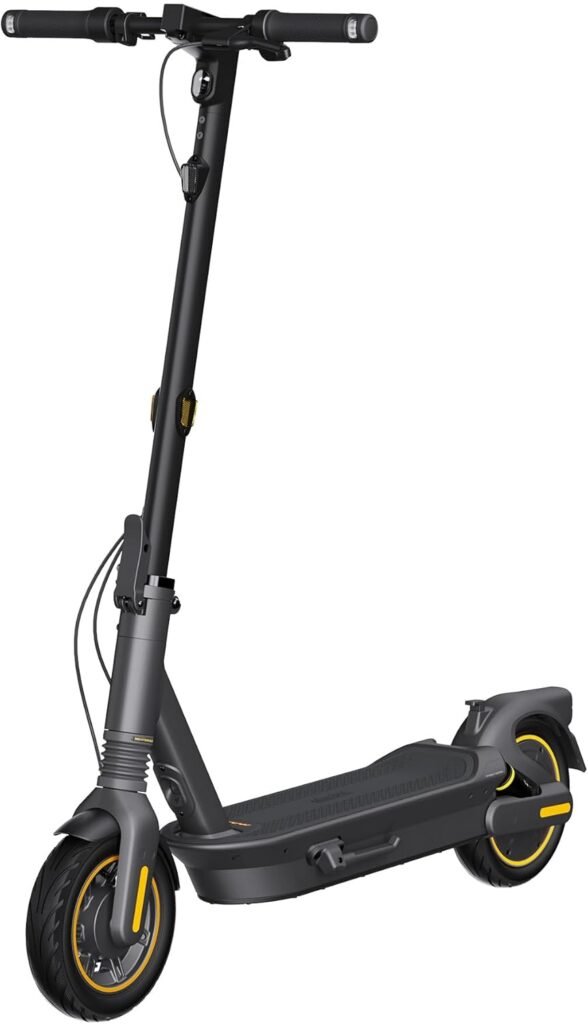
The Segway Ninebot Max line has been the default long-range recommendation in the US for years, and the G2 is the refined version. If your commute is long enough that range anxiety is real, this is the best electric scooter for long range on this list.
Segway’s claimed range of up to about 43 miles is a lab figure, but even at real-world numbers, most riders can go several days between charges. It also adds front and rear suspension and self-healing tubeless tires that seal small punctures automatically.
Is the higher price justified? In my opinion, yes — but only if you ride far enough to use it. For a 2-mile commute, you’re paying for capability you’ll never touch.
Key Features
- 450W nominal motor with significantly higher peak output
- Top speed: around 22 mph
- Claimed range: up to about 43 miles
- Weight capacity: about 265 lbs
- Tires: 10-inch self-healing tubeless
- Front and rear suspension
- Dual braking with regenerative front braking
- IPX5 water-resistance rating (rain-capable, not waterproof)
- Segway-Ninebot app with lock, cruise control, and firmware updates
- Integrated charger — no separate brick to carry
Electric Scooter Buying Guide
What Matters Most When Buying an Electric Scooter
Range is the spec people get wrong most often. Manufacturer range figures come from ideal tests: light rider, flat ground, low speed, warm weather. A realistic planning number is roughly 50–70% of the claimed range. If you need 10 real miles, shop for a scooter claiming 20+.
Real-world range drops with: rider weight, higher speeds, hills, cold temperatures, tire pressure, and stop-and-go riding.
Motor power determines hills, not just speed. A 250–350W motor is fine for flat cities. If you live somewhere hilly, look for 500W or more, or dual motors.
Brakes deserve more attention than speed. Look for dual braking systems — mechanical (disc or drum) plus electronic. A scooter that goes 20 mph and stops poorly is a bad scooter.
Tires change the ride more than anything. Pneumatic (air-filled) tires absorb bumps. Solid tires never go flat but transmit every crack. Tubeless self-healing tires split the difference and are worth paying for.
Weight capacity is a real limit. If you’re near or over the rating, expect slower acceleration, weaker hill climbing, and shorter range. For the best electric scooter for heavy adults, look for 260+ lb ratings.
Water resistance is not waterproofing. IPX4 handles light rain. IPX5 handles heavier rain. Neither means you can ride through standing water, and water damage is usually not covered by warranty.
Portability matters if you carry it. Anything over 40 lbs gets unpleasant on stairs or transit fast.
Frequently Asked Questions
What is the best electric scooter for adults in 2026?
Based on my research, the NIU KQi3 Pro is the best electric scooter for most adults because it balances range, braking, and build quality at a mid-range price. If you need maximum range, the Segway Ninebot Max G2 is the stronger pick. Budget riders should look at the Gotrax G4.
How much should I spend on an electric scooter?
For occasional short rides, $300–$500 is enough. For daily commuting, $500–$800 buys meaningfully better brakes, tires, and range. Above $800, you’re paying for long range, suspension, and durability. Spending under $250 usually means weak brakes and disappointing battery life.
What’s the best electric scooter for commuting?
For most commuters, I’d recommend the Hiboy S2 Pro for value or the NIU KQi3 Pro for refinement. Both fold for storage, have dual braking, and offer enough claimed range for a typical 5-to-8-mile commute. For rides over 10 miles each way, choose the Segway Ninebot Max G2.
Which electric scooter is best for beginners?
The NIU KQi3 Pro is my pick for beginners because of its triple braking system and beginner speed modes in the app. Predictable stopping matters more than top speed when you’re learning. The Gotrax G4 is a solid, lower-cost alternative for cautious first-time buyers.
How long do electric scooter batteries last?
Most lithium-ion scooter batteries last around 300 to 500 full charge cycles before capacity drops noticeably — often two to four years of regular use. You’ll extend that by avoiding full discharges, storing the scooter indoors, and not leaving it plugged in for days at a time.
Can you ride an electric scooter in the rain?
Light rain is usually fine on scooters rated IPX4 or higher, but no consumer e-scooter is waterproof. Avoid puddles, standing water, and heavy downpours. Braking distance increases on wet ground, and water damage is typically excluded from warranty coverage, so ride cautiously.
Are there electric scooters with seats?
Yes. Some models offer optional seat attachments, and a few are sold with seats included. Seats add comfort on longer rides but raise your center of gravity and make the scooter harder to fold and carry. If you want a seat, confirm compatibility before buying an add-on.
How fast do electric scooters go?
Most adult commuter e-scooters top out between 15 and 22 mph. That’s plenty for city riding and bike lanes. Faster performance scooters exist, but they’re heavier, pricier, and often restricted under local rules. For everyday use, 18–20 mph is the practical sweet spot.